App basics 9 min read
The Complete Guide to iPhone Screen Resolutions and Sizes
The iPhone is among the most popular & demanding smartphones in the world. But with so many different models and sizes, it can be overwhelming & time-consuming to keep up…
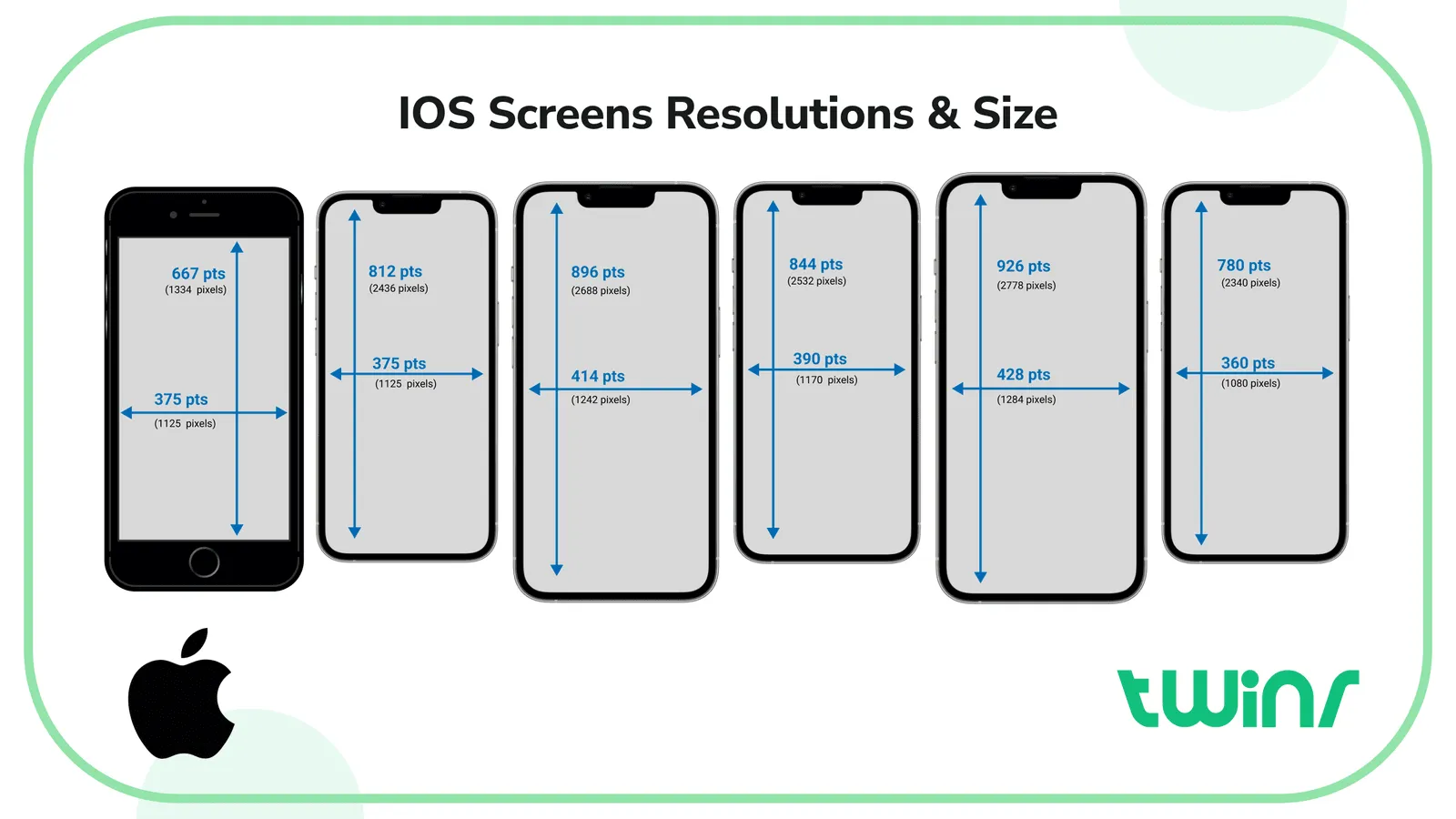
Every iPhone screen size, resolution and logical point value in one table, including iPhone Duo and the iPhone 18 Pro range. All figures are checked against Apple’s own technical specification pages.
The short answer: the largest iPhone screen is the iPhone Duo at 7.6 inches when unfolded. The largest non-folding iPhone is the iPhone 18 Pro Max at 6.9 inches, and the smallest current model is the iPhone 17e at 6.1 inches.
Every iPhone screen size and resolution
Resolutions are written height × width in portrait, matching how Apple lists them. “Points” is the logical resolution you lay out against in code; multiply by the scale factor to get pixels.
| Model | Screen (in) | Resolution (px) | Points (pt) | Scale | PPI |
|---|---|---|---|---|---|
| iPhone Duo (inner) | 7.6 | 2670 × 1878 | 951 × 669 | 3x | 430 |
| iPhone Duo (outer) | 5.4 | 2034 × 1398 | 678 × 466 | 3x | 460 |
| iPhone 18 Pro Max | 6.9 | 2868 × 1320 | 956 × 440 | 3x | 460 |
| iPhone 18 Pro | 6.3 | 2622 × 1206 | 874 × 402 | 3x | 460 |
| iPhone 17 Pro Max | 6.9 | 2868 × 1320 | 956 × 440 | 3x | 460 |
| iPhone Air | 6.5 | 2736 × 1260 | 912 × 420 | 3x | 460 |
| iPhone 17 Pro | 6.3 | 2622 × 1206 | 874 × 402 | 3x | 460 |
| iPhone 17 | 6.3 | 2622 × 1206 | 874 × 402 | 3x | 460 |
| iPhone 17e | 6.1 | 2532 × 1170 | 844 × 390 | 3x | 460 |
| iPhone 16 Pro Max | 6.9 | 2868 × 1320 | 956 × 440 | 3x | 460 |
| iPhone 16 Pro | 6.3 | 2622 × 1206 | 874 × 402 | 3x | 460 |
| iPhone 16 Plus | 6.7 | 2796 × 1290 | 932 × 430 | 3x | 460 |
| iPhone 16 | 6.1 | 2556 × 1179 | 852 × 393 | 3x | 460 |
| iPhone 16e | 6.1 | 2532 × 1170 | 844 × 390 | 3x | 460 |
| iPhone 15 Pro Max | 6.7 | 2796 × 1290 | 932 × 430 | 3x | 460 |
| iPhone 15 Plus | 6.7 | 2796 × 1290 | 932 × 430 | 3x | 460 |
| iPhone 15 Pro | 6.1 | 2556 × 1179 | 852 × 393 | 3x | 460 |
| iPhone 15 | 6.1 | 2556 × 1179 | 852 × 393 | 3x | 460 |
| iPhone 14 Pro Max | 6.7 | 2796 × 1290 | 932 × 430 | 3x | 460 |
| iPhone 14 Pro | 6.1 | 2556 × 1179 | 852 × 393 | 3x | 460 |
| iPhone 14 Plus | 6.7 | 2778 × 1284 | 926 × 428 | 3x | 458 |
| iPhone 14 | 6.1 | 2532 × 1170 | 844 × 390 | 3x | 460 |
| iPhone 13 Pro Max | 6.7 | 2778 × 1284 | 926 × 428 | 3x | 458 |
| iPhone 13 Pro | 6.1 | 2532 × 1170 | 844 × 390 | 3x | 460 |
| iPhone 13 | 6.1 | 2532 × 1170 | 844 × 390 | 3x | 460 |
| iPhone 13 mini | 5.4 | 2340 × 1080 | 812 × 375 | 3x* | 476 |
| iPhone 12 Pro Max | 6.7 | 2778 × 1284 | 926 × 428 | 3x | 458 |
| iPhone 12 Pro | 6.1 | 2532 × 1170 | 844 × 390 | 3x | 460 |
| iPhone 12 | 6.1 | 2532 × 1170 | 844 × 390 | 3x | 460 |
| iPhone 12 mini | 5.4 | 2340 × 1080 | 812 × 375 | 3x* | 476 |
| iPhone 11 Pro Max | 6.5 | 2688 × 1242 | 896 × 414 | 3x | 458 |
| iPhone 11 Pro | 5.8 | 2436 × 1125 | 812 × 375 | 3x | 458 |
| iPhone 11 | 6.1 | 1792 × 828 | 896 × 414 | 2x | 326 |
| iPhone XS Max | 6.5 | 2688 × 1242 | 896 × 414 | 3x | 458 |
| iPhone XS | 5.8 | 2436 × 1125 | 812 × 375 | 3x | 458 |
| iPhone XR | 6.1 | 1792 × 828 | 896 × 414 | 2x | 326 |
| iPhone X | 5.8 | 2436 × 1125 | 812 × 375 | 3x | 458 |
| iPhone 8 Plus | 5.5 | 1920 × 1080 | 736 × 414 | 3x* | 401 |
| iPhone 8 | 4.7 | 1334 × 750 | 667 × 375 | 2x | 326 |
| iPhone SE (2nd/3rd gen) | 4.7 | 1334 × 750 | 667 × 375 | 2x | 326 |
| iPhone 7 Plus / 6s Plus | 5.5 | 1920 × 1080 | 736 × 414 | 3x* | 401 |
| iPhone 7 / 6s / 6 | 4.7 | 1334 × 750 | 667 × 375 | 2x | 326 |
| iPhone SE (1st gen) / 5s / 5c / 5 | 4.0 | 1136 × 640 | 568 × 320 | 2x | 326 |
| iPhone 4 / 4s | 3.5 | 960 × 640 | 480 × 320 | 2x | 326 |
* Renders at 3x and downscales to fit a smaller panel. See the Plus and mini note below.
Three traps in that table
1. Same points, different panel. The iPhone 11 Pro (5.8”), iPhone X, iPhone XS and the 13 mini (5.4”) all lay out at 812 × 375 points, but they are not the same screen. The X, XS and 11 Pro draw that at a true 3x into 2436 × 1125 pixels. The minis render the same 3x image and then downscale it into a 2340 × 1080 panel, which is why they reach 476 PPI against 458.
2. iPhone 11 and XR are 2x, not 3x. Both have 6.1-inch screens like the iPhone 16, but render at 896 × 414 points with two pixels per point instead of three. Export assets at 2x for those or they will look soft.
3. The Plus models render larger than their panel. The iPhone 8 Plus lays out at 414 × 736 points at 3x, which is 1242 × 2208 pixels, then downscales to a 1080 × 1920 panel. iPhone Duo does the same thing, which is the next section.
iPhone Duo: two screens, one device
iPhone Duo is the first folding iPhone. It has two displays, and you have to design for both.
| Display | Screen | Resolution | Points | PPI |
|---|---|---|---|---|
| Inner (unfolded) | 7.6 in | 2670 × 1878 px | 951 × 669 | 430 |
| Outer (folded) | 5.4 in | 2034 × 1398 px | 678 × 466 | 460 |
The inner display is the interesting one. Apple’s App Store Connect screenshot specification asks for 2007 × 2853 pixels for it, but the physical panel is 1878 × 2670. Those disagree because iOS renders at 669 × 951 points at 3x and then scales the result down by about 6.4% to fit the panel, exactly as the 5.5-inch Plus iPhones did.
So when you build for Duo, lay out against 669 × 951 points, and submit screenshots at 2007 × 2853 pixels.
One more thing worth knowing: the inner display’s aspect ratio is about 1.42, close to the proportions of A4 paper. That suits documents and side-by-side layouts, but 16:9 video letterboxes in landscape and loses roughly a fifth of the screen to black bars.
A note on where these numbers come from. Apple publishes the pixel counts, the pixel densities and the screenshot dimensions. It does not publish point values for iPhone Duo. The 669 × 951 figure is arithmetic from Apple’s own screenshot specification, not a published Apple spec, and third-party sources currently disagree on it.
Nominal size versus actual size
Apple quotes two different diagonals for the same screen, and both are correct.
| Model | Nominal | Measured as a rectangle |
|---|---|---|
| iPhone 18 Pro Max | 6.9 in | 6.86 in |
| iPhone Air | 6.5 in | 6.55 in |
| iPhone 18 Pro | 6.3 in | 6.27 in |
| iPhone Duo (inner) | 7.6 in | 7.58 in |
| iPhone Duo (outer) | 5.4 in | 5.36 in |
The marketing figure treats the display as a plain rectangle. Because the corners are rounded and, on most models, the Dynamic Island cuts into the top, the area you can actually draw in is smaller than either number suggests. Design against points and safe areas, not against inches.
Which sizes do you actually need to support?
You do not need an asset for every row above. For App Store submission, Apple currently requires screenshots for only one size: 6.3-inch iPhone with Dynamic Island (1206 × 2622 or 1179 × 2556 pixels). Everything else is optional, and Apple scales your 6.3-inch screenshots to fill the gaps.
Two deadlines worth putting in your calendar:
- April 2027. iPhone Duo screenshots become required for apps built with the iOS 27.1 SDK or later.
- iOS 27 and later. Creative assets now appear in App Store search results and as a product page header. If you do not supply them, Apple falls back to your screenshots.
Designing for every screen without building every screen
If you are building natively, the answer is Auto Layout, size classes and safe area insets rather than hardcoded dimensions. Lay out in points, let the system handle pixels, and test on the smallest and largest screens rather than the average one.
If your product is already a website, there is a shorter route. Twinr converts your existing site into native iOS and Android apps, and your responsive layout does the adapting it already does in the browser. You do not maintain a separate set of layouts for 6.1-inch, 6.9-inch and 7.6-inch screens, because the web layout already handles them.
Being honest about the limits: if your app needs heavy native animation, or complex gesture-driven interfaces tuned per screen size, a wrapper is the wrong tool and you should build natively. For content, commerce and most business apps, the website you already have is the better starting point. We also handle App Store submission, which means the screenshot requirements above are our problem rather than yours.
Sources
All figures verified against Apple’s technical specifications and App Store Connect documentation, October 2026. Where Apple does not publish a value, such as logical points for iPhone Duo, that is stated in the text above.

Gaurav Parvadiya
Gaurav co-founded Twinr in 2021 to put native mobile apps within reach of businesses with no in-house mobile team. He works on the platform day to day, where it has since helped 50,000+ businesses turn a website into a native iOS and Android app, and writes about store approval, push notifications, and the decisions that separate a real native app from a wrapper.
All posts by GauravFrequently asked questions
What is the largest iPhone screen?
iPhone Duo, at 7.6 inches unfolded. The largest non-folding iPhone is the iPhone 18 Pro Max at 6.9 inches.
What is the iPhone 18 Pro Max screen resolution?
2868 × 1320 pixels at 460 PPI, which is 956 × 440 points at 3x.
Is there a standard iPhone 18?
No. Apple's 2026 lineup is iPhone Duo, iPhone 18 Pro and iPhone 18 Pro Max. The current standard model is still the iPhone 17.
What is the difference between pixels and points?
Points are the units you lay out in; pixels are what the screen draws. A 3x device draws three pixels for every point. Designing in points means one layout works across devices with different pixel densities.
What screen size should I design for first?
The 6.3-inch Dynamic Island size, because it is the only screenshot size Apple requires for App Store submission. Then check the smallest screen you support, which is usually where layouts break.
Do iPhone 11 and iPhone XR really use 2x?
Yes. Despite their 6.1-inch screens, both render at 896 × 414 points with a 2x scale factor, giving 1792 × 828 pixels.